Golden Doodle Care Guide: Tips for Owners
Are you proud to own a Golden Doodle or thinking of getting one? This guide is here to help you understand Golden Doodle care. They are known for their love and friendly nature. Golden Doodles mix the best of Golden Retrievers and Poodles.
They have been loved for their looks and versatility, starting in 1969. They’ve become more popular in the 1990s. They live 10 to 15 years and need regular exercise. This guide will cover feeding, grooming, training, and health issues to help you care for your Golden Doodle.
Key Takeaways
- Golden Doodles range from 13 to 26 inches in height and 45 to 100 pounds in weight
- Their coat can be gold, cream, red, black, brown, white, gray, or combinations
- High affection levels and kid-friendly nature make them great family pets
- Golden Doodles require at least 30 minutes to 1 hour of exercise daily
- Professional grooming is recommended every 8 to 12 weeks
- Common health issues include hip dysplasia and eye disorders
Introduction to Golden Doodles
Golden Doodles, also known as Goldendoodles, are a mix of the friendly Golden Retriever and the smart Poodle. They are a breed made to bring together the best traits of both parents. This results in a dog that is friendly, smart, and has a hypoallergenic coat.
The Golden Doodle’s history starts in the late 1960s in the United States. They were first bred as guide dogs for the blind. But it wasn’t until the 1990s that they became popular in North America and Australia. The term “Goldendoodle” was first used in 1992 by the Neelands family in the USA.
Golden Doodle breed info shows they have many good qualities. They have curly or wavy coats, which are great for families with mild allergies. F1 Goldendoodles, a mix of a Golden Retriever and a Poodle, shed very little or not at all. F1b Goldendoodles, a mix of an F1 Goldendoodle and a Poodle, are even more likely to be non-shedding.
Golden Doodles have become popular because of their gentle nature, adaptability, and good fit for multi-pet homes. Their hypoallergenic coats, smart and friendly nature, and easy trainability make them perfect family pets and companions for people with allergies.
Understanding Golden Doodle Temperament
Golden Doodles are known for being loving, full of energy, and smart. These qualities make them great family pets. They bond well with their owners and love to be around people.
They are easy to train and can adapt to new situations. Golden Doodles learn quickly because they are eager to please. They also understand their owners’ feelings, making them wonderful friends.
Golden Doodles need lots of physical and mental activities. They have a lot of energy and need to run, play fetch, and swim. This keeps them happy and healthy.
They get along well with kids and other pets. Their friendly and playful nature makes them perfect for busy homes. But, they need lots of interaction and mental games to stay happy.
It’s important to socialize Golden Doodles when they’re young. This helps them grow into well-adjusted dogs. They learn to handle different situations and stay loving and friendly.
Feeding Your Golden Doodle
Feeding a Golden Doodle right means knowing their special diet needs. They are a mix of a Poodle and a Golden Retriever. They need dog food that’s high in protein and has meat as the main ingredient. It’s key to pick the best food for them to stay healthy and happy.
Golden Doodle diet tips say it’s important to control how much they eat. Eating too much can cause obesity and health problems like hip dysplasia and patellar luxation. Here are the weight ranges for Golden Doodles:
- Miniature (15 to 30 pounds)
- Medium (30 to 45 pounds)
- Standard (45 to 100 pounds)
How much to feed them depends on their weight:
- Miniature: 1 to 2 cups per day
- Medium: 2 to 4 cups per day
- Standard: 3 to 5 cups per day
Puppies need different feeding schedules as they grow:
- 8 – 12 weeks: Up to ⅔ cups, 3 to 4 times a day
- 4 – 5 months: 1.5 to 3 cups, 3 times a day
- 6 – 12 months: 3 to 4 cups, 2 times a day
- 12 months +: 4 – 5 cups, 1 to 2 times a day
Feeding a Golden Doodle right keeps them full of energy. They need about two hours of exercise every day. Following these diet tips helps your Golden Doodle live a long, happy life.
Golden Doodles can get health problems from their parents. So, regular vet visits and a special diet are very important for their long life.
Golden Doodle Size and Growth
Knowing about Golden Doodle size and growth is vital for their health and happiness. These dogs come in different sizes, thanks to their Poodle heritage. This includes Standard, Miniature, and Toy Poodles.
Goldendoodles are divided into four sizes: Toy, Miniature, Medium, and Standard. Each size has its own weight and height.
- Toy Goldendoodles: These small dogs are 10 to 14 inches tall and weigh 10 to 24 lbs. They’re perfect for small homes or apartments.
- Mini Goldendoodles: Known for being adaptable, Minis weigh 20-40 lbs and are 16-20 inches tall. They make great family pets.
- Medium Goldendoodles: They’re about 18 to 21 inches tall and weigh 35 to 55 lbs. They fit well in average-sized homes and are versatile.
- Standard Goldendoodles: These bigger dogs are 21 to 25 inches tall and weigh 50 to 90 lbs. They need a lot of space, like a big backyard.
The Golden Doodle growth chart helps track puppies’ growth. At 8 weeks, Mini Goldendoodles weigh 4-9 lbs, Medium Goldendoodles weigh 8-10 lbs, and Standard Goldendoodles weigh over 9 lbs.
Mini Goldendoodles grow half their adult weight by 4 months. They stop growing between 7-10 months. Standard Goldendoodles grow slower, reaching half their adult weight after 4 months. They can keep growing until they’re 2 years old, like Standard Poodles and Golden Retrievers.[fusion_youtube id=”https://www.youtube.com/watch?v=XiF-dAsw_u4″ alignment=”” width=”” height=”” start_time=”” end_time=”” autoplay=”false” mute=”false” loop=”false” controls=”true” api_params=”” title_attribute=”” video_facade=”” thumbnail_size=”auto” margin_top=”” margin_bottom=”” hide_on_mobile=”small-visibility,medium-visibility,large-visibility” class=”” css_id=”” structured_data=”off” video_upload_date=”” video_duration=”” video_title=”” video_desc=””][/fusion_youtube]
Each Golden Doodle grows differently, but males are usually 10% bigger than females. Using a Golden Doodle growth chart is key to their healthy growth.
Daily grooming is needed for their curly coats to avoid matting. Choose the right size for their care products, like crates, leashes, collars, and bedding.
Exercise Needs for Golden Doodles
Golden Doodles are full of energy and need lots of physical activity. This keeps them healthy and happy. They need 30 to 60 minutes of exercise every day, split into two sessions.
Golden Doodles get their energy from their Golden Retriever and Poodle parents. Activities like walks, runs, or swims are great for them. Swimming is good for older dogs or those with health issues.
- Daily Walks: Walking is good for your Golden Doodle’s body and mind. It lets them explore new sights and smells.
- Play Sessions: Playing at home or the dog park is key. Off-leash play lets them move freely.
- Agility Exercises: Agility courses challenge their body and mind. They help keep your Golden Doodle healthy and prevent bad behavior.
Puppies need special care when it comes to exercise. They should only do 5 minutes of exercise for each month of age. For example, a three-month-old puppy should not do more than 15 minutes of playtime.
As they grow, you can adjust their exercise routine. Older Golden Doodles need to stay active to avoid muscle loss and joint stiffness.
Not enough exercise can cause problems like chewing and barking. These issues come from boredom. A regular exercise routine helps prevent these problems. Also, not enough exercise can lead to obesity, which increases the risk of diabetes.
In hot weather, avoid hard exercise to prevent heatstroke. Watch for signs of overexertion like limping, panting, or being tired. This keeps your Golden Doodle healthy and active.
“A well-exercised Golden Doodle is a happy Golden Doodle. Daily physical activities are key to preventing both behavioral and health issues.”
Grooming Your Golden Doodle
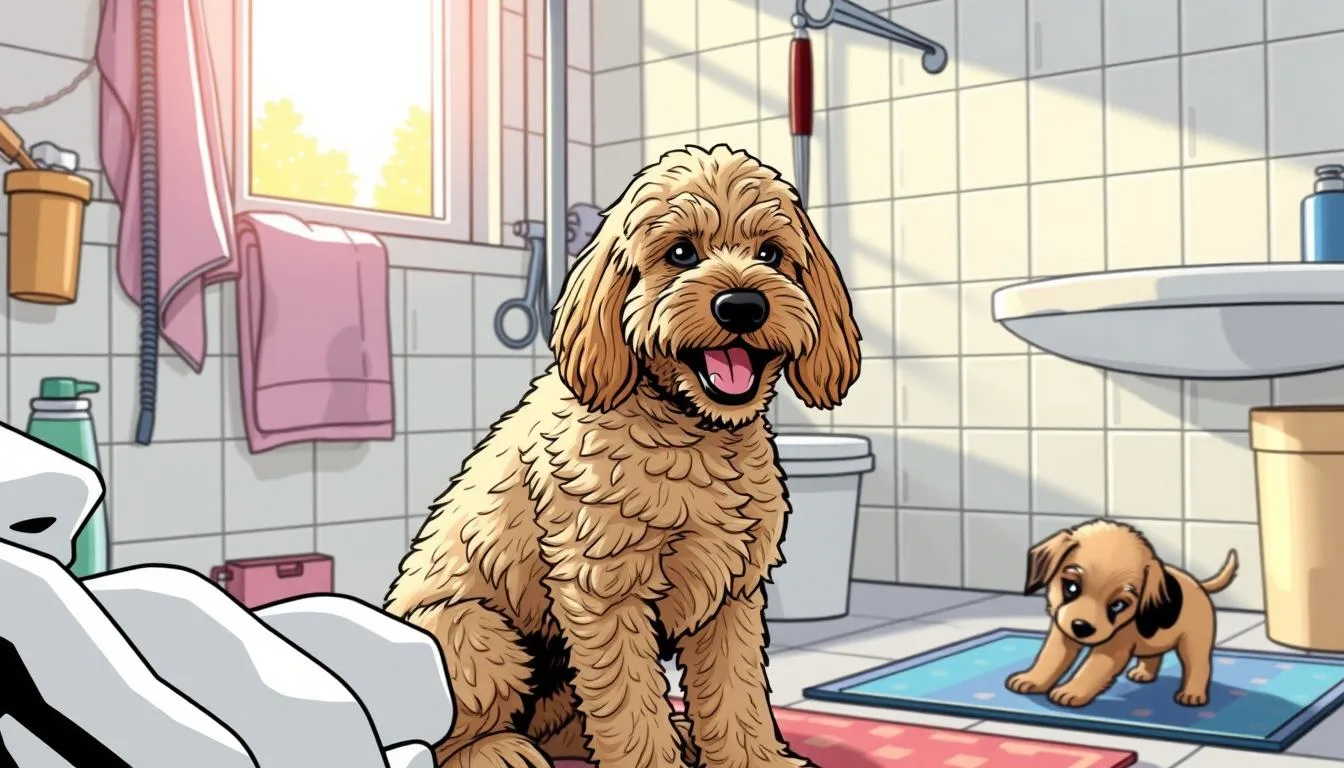
Grooming a Golden Doodle is key to keeping them healthy and looking good. The grooming needs vary based on the coat type. Curly-coated Golden Doodles need daily brushing to stop matting. Wavy-coated ones should brush a few times a week to avoid tangles. Even straight-coated Golden Doodles need regular grooming to keep their coat healthy.
Full grooming sessions should happen every 4-6 weeks. Regular brushing keeps the coat tangle-free and makes it shiny. Using a slicker brush and a metal comb helps fluff the coat and manage mats.
Bathing should be every 2 to 4 weeks, depending on activity level. Avoid overbathing to keep natural oils in the skin. Also, dry their ears after bathing to prevent infections.
Here are some essential Golden Doodle grooming tips:
- Always perform regular brushing (ideally daily) to avoid mats and tangles.
- Invest in a slicker brush and metal comb for effective grooming sessions.
- A professional grooming session every 4-6 weeks is recommended.
- Ensure nails are trimmed at least once a month to prevent overgrowth and discomfort.
- Use blunt-tipped scissors and thinning shears for eye area grooming to prevent visual obstruction.
- A grooming table with an arm can be a beneficial investment for home grooming setups.
Golden Doodle coat care also means watching for skin irritations. About 50% of Golden Doodles get allergies from their parents. Regular grooming and vet visits can help with skin problems. Start grooming when your pup is 10-12 weeks old for a smooth experience.
By sticking to these grooming tips and a regular schedule, your Golden Doodle will stay comfortable, look great, and have healthy skin and coat.
Managing Allergies in Golden Doodles
Golden Doodles are often seen as hypoallergenic pets. But, it’s key to know that hypoallergenic doesn’t mean no allergies. They can cause allergic reactions, like a runny nose or itchy eyes, due to dander, saliva, and urine.
Allergies are different for everyone. What one person can handle might cause a big reaction in another. Pet dander, not fur, is usually the main problem. The type of coat a Golden Doodle has can also play a role in allergies.
Golden Doodles come in many types, like F1, F1b, F2, F2b, and Multigen. Each type can have different coats and dander levels. This affects their allergy levels. It’s important for people to spend time with them to see if they have allergies.
To manage Golden Doodle allergies, consider these steps:
- Maintain a grooming routine that includes daily brushing and weekly baths to reduce allergens.
- Use air purifiers and HEPA filters to minimize airborne dander.
- Frequent cleaning, such as dusting and vacuuming, can help manage allergens in your home.
- Regular veterinary check-ups are essential for monitoring your Golden Doodle’s health and identifying any possible allergy triggers.
- Allergy medications like Benadryl can help manage mild, infrequent allergy symptoms.
Some Golden Doodles may shed a moderate amount. Their loose fur gets trapped in their curls, which can help reduce allergens. Even though they are seen as hypoallergenic, people with asthma or severe allergies should be careful. Getting advice from a healthcare professional is important. A hypoallergenic diet and regular grooming can also help.
Golden Doodle Training Tips
Training Golden Doodles is rewarding because they are smart and eager to please. Start with basic commands like “sit,” “stay,” and “come.” Use positive reinforcement with praise and rewards to help them learn.

Start training your Golden Doodle puppy at 7 to 8 weeks old. Short, daily sessions of 10 minutes are best, with two to three sessions a day. Consistency is important, and treats can help a lot because they love food.
Golden Doodles learn fast because they are very smart. Use clicker training to mark good behavior and reward with treats like hot dog bits. Praise them too to build their confidence.
House training means knowing when they need to go. Take them outside every 45-60 minutes, after eating, and in the morning. Crate training helps them learn not to soil their sleeping area.
For advanced training, stay patient and loving. This positive attitude can make training 50% more successful. As they learn, start using less treats and more praise.
Every Golden Doodle is different, and learning takes time. It usually takes 5-7 days to learn a new command. With patience and consistency, they become well-behaved and happy pets.
Common Health Issues in Golden Doodles
Golden Doodles are cute and loving dogs. But, they can face health problems because of their mixed background. Knowing these issues and taking good care of your Golden Doodle can help them stay healthy.
Hip dysplasia is a big problem for Golden Doodles. It comes from their Golden Retriever side. This condition makes the hip joint grow wrong, leading to arthritis or lameness.
Progressive Retinal Atrophy (PRA) is another big worry. Poodles and Golden Retrievers often get this, which can cause blindness. Taking your Golden Doodle for regular eye exams is key to catching it early.
Ear infections are common too. Their floppy ears can trap moisture, leading to infections. Keeping their ears clean is important for their health.
Golden Doodles can also get allergies. These can be from the environment or food. Signs include a lot of licking and skin problems. Finding out what they’re allergic to and avoiding it is important.
Hypothyroidism is another issue. It makes them gain weight and feel tired. It’s common in Golden Retrievers and Poodles, and Golden Doodles too. Regular thyroid tests are a must.
Hemangiosarcoma is a serious cancer that affects Golden Retrievers. While we don’t know the exact risk for Golden Doodles, watching for any unusual lumps or behavior is important.
Osteosarcoma is more common in bigger dogs, putting Golden Doodles at risk. Joint problems like hip and elbow dysplasia can also lead to arthritis. This makes it important to take good care of them as they get older.
Regular vet visits, watching for symptoms, and a balanced diet are key to keeping your Golden Doodle healthy. With proper care, your dog can live a happy and healthy life.
Maintaining Your Golden Doodle’s Dental Hygiene
Taking care of your Golden Doodle’s dental health is key. They can easily get plaque and tartar, which can harm their gums and teeth. This can even affect their overall health.
Brushing their teeth every day is essential. Use a toothbrush and toothpaste made for dogs. Start when they’re young to make it a habit.
Cleaning your Golden Doodle’s teeth helps prevent bad breath and tooth loss. Here are some tips for dental health for dogs:
- Brush their teeth daily using dog-specific toothpaste.
- Provide dental chews or biscuits to help remove plaque and bacteria.
- Regularly inspect their gums for signs of inflammation or bleeding.
- Schedule professional dental cleanings annually or as advised by your vet.
Professional cleanings are important. They use special tools to find and fix dental problems early. Giving your Golden Doodle special vitamins can also help their teeth.
Watch for signs like red gums, loose teeth, or too much drooling. These mean they need to see the vet. Bad breath can also mean there’s a dental problem.
By focusing on Golden Doodle dental care, you help them stay healthy. Use smart toothbrushes and dental apps to make cleaning easier and more effective.
Socializing Your Golden Doodle
Early socialization is key for a confident and happy Golden Doodle. The best time to socialize a puppy is between three to sixteen weeks. Exposing them to various environments, people, and pets during this time helps prevent future behavioral problems.
Effective puppy socialization means introducing them to different things in a controlled way. It’s suggested that a puppy visits seven places, meets seven people, and experiences seven surfaces each week. This helps them get used to different situations and reduces fear or anxiety.
Socializing a Golden Doodle with other pets early on helps them have positive interactions. Classes like “puppy kindergarten” provide a safe space for play. But, remember to watch them closely to avoid any negative impacts.
It’s important to introduce them to new things gradually. Puppies have short attention spans, so short, frequent sessions work better. Introduce them to common noises and handle their paws, mouth, and ears. This prepares them for grooming and vet visits and helps build a good temperament.
Experts say to avoid areas with unvaccinated dogs until the puppy is fully vaccinated, usually by four months. Keeping most socialization activities in controlled environments helps prevent negative experiences.
Keep up with socialization efforts even after puppyhood. Adult Golden Doodles also benefit from regular exposure to new situations and people. This keeps them adaptable and maintains a good temperament.
Potty Training Your Golden Doodle Puppy
Potty training a Golden Doodle puppy is rewarding but challenging. Start training them as soon as they come home, usually at 8 weeks. Being consistent and patient is key to successful housetraining.
- Most puppies need six months to master potty training. But, a dedicated owner can train a Golden Doodle to go potty by four months.
- A regular feeding schedule helps predict when your puppy needs to go. This reduces accidents.
- A 12-week-old puppy might have many accidents a day because their bladder is small.
Creating a consistent schedule is a great way to house train puppies. They usually need to go after eating, sleeping, or playing. Taking your Golden Doodle outside every hour during playtime can help prevent accidents.
Using a crate when you’re not watching helps keep your puppy safe. It also encourages good potty habits. Remember, a young puppy’s bladder is small, so they need to go often, like after drinking water.[fusion_youtube id=”https://www.youtube.com/watch?v=79v8KK1zcxM” alignment=”” width=”” height=”” start_time=”” end_time=”” autoplay=”false” mute=”false” loop=”false” controls=”true” api_params=”” title_attribute=”” video_facade=”” thumbnail_size=”auto” margin_top=”” margin_bottom=”” hide_on_mobile=”small-visibility,medium-visibility,large-visibility” class=”” css_id=”” structured_data=”off” video_upload_date=”” video_duration=”” video_title=”” video_desc=””][/fusion_youtube]
Positive reinforcement is key to successful potty training. Give your Golden Doodle healthy treats or praise them right after they go outside. It’s also good to use one potty spot. Dogs like to go on familiar surfaces like grass or dirt, which makes training easier.
Accidents will happen, but it’s important to handle them well. Avoid punishment, as it can make your puppy hide their accidents. Instead, guide them to the right potty spot and always praise them for good behavior.
“87% of dog trainers advocate for positive reinforcement methods due to their higher effectiveness in achieving desired behaviors.”
Limiting your puppy’s access helps with supervision, which is key to potty training. Use baby gates or close doors to keep them in one area. This makes it easier to watch and teach them good bathroom habits.
Potty training takes weeks to months. Stay consistent, patient, and positive. With these steps, you can raise a well-trained Golden Doodle. This ensures a smooth transition into your home with fewer accidents and clear bathroom habits.
Importance of Regular Veterinary Check-ups
Regular vet visits are key to keeping your Golden Doodle healthy and happy. These visits include many services to keep your pet in top shape. Routine check-ups help catch health problems early.
Golden Doodles need core vaccines starting at 8 weeks old. These shots protect against many diseases. They also need monthly heartworm prevention and deworming to stay parasite-free.
As your Golden Doodle gets older, yearly health checks become more important. Starting at 5 to 7 years, blood tests help catch diseases like joint problems. Golden Doodles often get hip dysplasia and joint issues, so joint supplements are helpful from a year old.
Golden Doodles also get ear infections and skin problems often. Regular grooming helps keep their skin and coat healthy. Vets can show you the best ways to groom your dog.
Keeping an eye on your dog’s digestive health is also vital. Golden Doodles can have sensitive stomachs. Probiotics can help keep their digestion balanced, as your vet will suggest.
Choosing a good vet who knows about Golden Doodles is important. They help with health issues and catch problems early. This can prevent up to 70% of health problems.
In short, regular vet visits are essential for your Golden Doodle’s health. By making these visits a priority, you’re ensuring your pet lives a long, happy life.
Best Toys and Accessories for Your Golden Doodle
Golden Doodles are full of energy and love to play. They need the right toys and accessories to stay happy and healthy. Choosing the best toys for Golden Doodles is key to their well-being.
- Fetch Toys: These are perfect for Golden Doodles because of their Retriever background. Fetch toys keep them active and mentally sharp. Pick sizes that fit your dog’s energy level, big or small.
- Squeaky and Plush Toys: Squeaky toys, like Outward Hound Invincibles, spark their natural hunting instinct. Plush toys offer comfort, but watch them to avoid choking hazards.
- Tug and Rope Toys: Tug toys satisfy their wrestling urge. Rope toys, like Mammoth Flossy Chews, help clean their teeth while they play. This combo is great for their health and fun.
- Puzzle and Interactive Toys: Toys like the Kong Classic challenge their minds. They keep Golden Doodles busy and can even reward them with treats.
- Treat Dispensers: These slow down eating, making meals fun. They’re perfect for keeping your Golden Doodle engaged.
Golden Doodles also need good beds for joint support, grooming kits for clean coats, and ball launchers for exercise. Keeping these toys clean and well-maintained is important. It ensures your Golden Doodle stays safe and happy for a long time.
Lifespan and Aging in Golden Doodles
Golden Doodles are known for their friendly and playful nature. Knowing about their lifespan and what affects it helps owners care for them better. They usually live between 10 to 15 years. This is thanks to their parent breeds, Golden Retrievers and Poodles, who live long lives.
As Golden Doodles age, their care needs change. They might need different food, less exercise, and more vet visits. For example, older dogs might need special food and regular check-ups for health issues like hip dysplasia and heart disease.
Exercise is key for senior Golden Doodles. Younger ones need 30 to 60 minutes of activity daily. But older dogs need shorter, gentler walks. Owners should also keep up with grooming, as older dogs might need more help.
Emotional well-being is also important for senior Golden Doodles. They need fun activities and lots of social time to stay happy. Making these changes can help them live longer, happier lives.
Conclusion
Owning a Golden Doodle is a joyful and rewarding experience. These dogs are affectionate and intelligent. They come from Australia and the United States.
They need a good care routine to thrive in your home. This includes understanding their temperament and grooming needs. Exercise and diet are also key to their well-being.
Golden Doodles need regular health checks. Watch out for hip dysplasia and eye diseases. Keeping their teeth clean and managing allergies is important too.
Training, socialization, and vet visits are essential. These dogs live for 12-15 years. They are great with families and a big commitment.
By following these care tips, you’ll make your Golden Doodle happy. Joining a community of Golden Doodle owners can help too. The love and loyalty they give is worth all the effort.
FAQ
What is a Golden Doodle?
What is the typical Golden Doodle temperament?
How often should I groom my Golden Doodle?
What size can I expect my Golden Doodle to be?
What is the average lifespan of a Golden Doodle?
What are the exercise needs of a Golden Doodle?
How should I feed my Golden Doodle?
Are Golden Doodles hypoallergenic?
What are common health issues in Golden Doodles?
How do I train my Golden Doodle puppy?
How do I maintain my Golden Doodle’s dental hygiene?
How should I socialize my Golden Doodle?
How can I potty train my Golden Doodle puppy?
Why are regular veterinary check-ups important for my Golden Doodle?
What are the best toys and accessories for my Golden Doodle?
Source Links
- Meet the Smart and Lovable Goldendoodle – https://www.thesprucepets.com/goldendoodle-dog-breed-profile-4169836
- Golden Doodle Care Guide | Brooklyn Pet Spa – https://brooklynpetspa.com/golden-doodle/
- FAQ: Goldendoodles – https://goldendoodles.com/faqs/goldendoodle_faq.htm
- Goldendoodle – https://spiritdogtraining.com/breeds/goldendoodle/
- Introducing Your Goldendoodle To Your Other Pets | Mountain Meadow Puppies – https://mountainmeadowpuppies.com/introducing-your-goldendoodle-to-your-other-pets/
- Goldendoodle Temperament: 5 Things You Should Know About this Breed – Pride & Prejudoodles – https://www.prideandprejudoodles.com/goldendoodle-temperament/
- Goldendoodle Temperament Blog | Central Illinois Doodles – https://centralillinoisdoodles.com/blog/goldendoodle-temperament-7-things-you-should-know/
- Diet & Nutrition Guide: Goldendoodles | PetPlate – https://origin-prod-wpengine.petplate.dev/blog/goldendoodle-feeding-guide/
- Goldendoodle Feeding Guide – https://www.prodograw.com/raw-feeding-guide/goldendoodle-feeding-guide/
- Complete Guide on Goldendoodle Size: Toy, Mini, Medium, or Standard | Central Illinois Doodles – https://centralillinoisdoodles.com/blog/goldendoodle-sizes/
- Goldendoodle Growth Curve – Timberidge Goldendoodles – https://timberidgegoldendoodles.com/goldendoodle-growth-curve/
- How Much Exercise Does My Dog Need? | Fox Creek Farm – https://goldendoodles.net/how-much-exercise-does-my-dog-need/
- How Much Exercise Do Goldendoodles Need? Vet-Approved Advice – Dogster – https://www.dogster.com/dog-health-care/how-much-exercise-do-goldendoodles-need
- Age-appropriate Exercise for Your Goldendoodle Puppy | PGD – https://www.platinumgoldendoodles.com/age-appropriate-exercise-for-your-goldendoodle-puppy/
- How to Groom A Goldendoodle – https://smoochie-pooch.com/how-to-groom-a-goldendoodle/
- 12 Tips for Goldendoodle Grooming at Home | Fox Creek – https://goldendoodles.net/12-steps-to-grooming-your-goldendoodle-at-home/
- How To Groom A Goldendoodle – Timberidge Goldendoodles – https://timberidgegoldendoodles.com/doodle-haircuts/how-to-groom-a-goldendoodle/
- Allergies with a Goldendoodle: Hypoallergenic for All? – https://goldendoodles.net/allergies-with-a-goldendoodle-hypoallergenic-for-everyone/
- Are Goldendoodles Hypoallergenic? How to Manage Goldendoodle Allergies – Rocky Kanaka – https://rockykanaka.com/are-goldendoodles-hypoallergenic/
- Housebreaking your Goldendoodle – Puppy Care & Training – https://goldendoodles.net/housebreakingpuppy-care-and-training/
- Goldendoodle Training – Puppy Training advice (from a trainer) – Your Modern Dad – https://yourmoderndad.com/train-mini-goldendoodle-puppy/
- Fun Tricks You Can Teach Your Goldendoodle – Hidden Acres Puppies – https://hiddenacrespuppies.com/5-fun-tricks-you-can-teach-your-goldendoodle/
- Caring for Your Goldendoodle: Health Concerns and Cancer Awareness – ImpriMed – https://www.imprimedicine.com/blog/goldendoodle
- The Most Common Health Issues in Goldendoodles – https://jiminys.com/blogs/benefits/the-most-common-health-issues-in-goldendoodles?srsltid=AfmBOorVuoSGwuKZDfCaseyCs65fy8QM6o_6ue7POV1tAq08al77_vZa
- Dental Wellness for Goldendoodle: Mastering Best Cleaning Practices in 2024 – https://balancedbreed.com/blogs/balanced-breed-articles/dental-wellness-for-goldendoodle-mastering-best-cleaning-practices-in-2024?srsltid=AfmBOopHyxxMJZouErfrhGkMIpFskq9vq6b3zfLgjShIvN2AYQ7MEkdM
- Goldendoodle Teeth Problems—Dental Causes and Remedies – https://www.fivebarks.com/goldendoodle-teeth-problems/
- Socializing Your Puppy or Adult Dog At All Stages – https://www.rivervalleydoodles.com/socialize-your-puppy.html
- 53: How to Socialize Your Doodle Puppy: Expert Advice (Part 1) – https://podcasts.apple.com/us/podcast/how-to-socialize-your-doodle-puppy-expert-advice-part-1/id1635060285?i=1000679391334
- How to Socialize a Goldendoodle Puppy: Wrong & Right Ways – https://iheartdogs.com/how-to-socialize-a-goldendoodle-puppy-wrong-right-ways/
- A Complete Guide on Potty Training Your Goldendoodle – https://goldendoodles.net/a-complete-guide-on-potty-training-your-goldendoodle/
- Goldendoodle Potty Training (2024) – https://www.doodledogtown.com/blogs/news/when-can-you-start-potty-training-a-puppy?srsltid=AfmBOopoLRaaVzXW1llhBh4_5YqkN6JHDTOoLmWPiyIn0SCVYLO4a8hs
- Goldendoodle Preventative Care – Everything You Need To Know! – https://www.vettedpethealth.com/resources/goldendoodle-preventative-care-everything-you-need-to-know
- Golden Doodle | How To Do Care Of Your Golden Doodle Puppies – https://brooklynpetspa.com/what-is-a-golden-doodle-how-to-do-care-of-your-golden-doodle-puppies/
- The Best Toys for Goldendoodle Puppies and Adults, Fox Creek – https://goldendoodles.net/the-best-toys-for-goldendoodle-puppies-and-adults/
- What are the best holiday gifts for a Golden Doodle? | Happy Pup Manor | Doodle Breed Dog Training Schaumburg – https://happypupmanor.com/what-are-the-best-holiday-gifts-for-a-goldendoodle/
- Goldendoodle – https://www.petmd.com/dog/breeds/goldendoodle
- Goldendoodle Lifespan: Get the Facts on Your Pup’s Life Expectancy – Pride & Prejudoodles – https://www.prideandprejudoodles.com/goldendoodle-lifespan/
- The Origins and Development of the Goldendoodle Dog Breed – https://poosanddoodles.com/pages/the-origins-and-development-of-the-goldendoodle-dog-breed
- Are Goldendoodles the Healthiest Dog Breed to Own? | FCF – https://goldendoodles.net/are-goldendoodles-the-healthiest-dog-breed-to-own/