The Science Behind Play: Why It’s Essential for Your Dog’s Health and Happiness
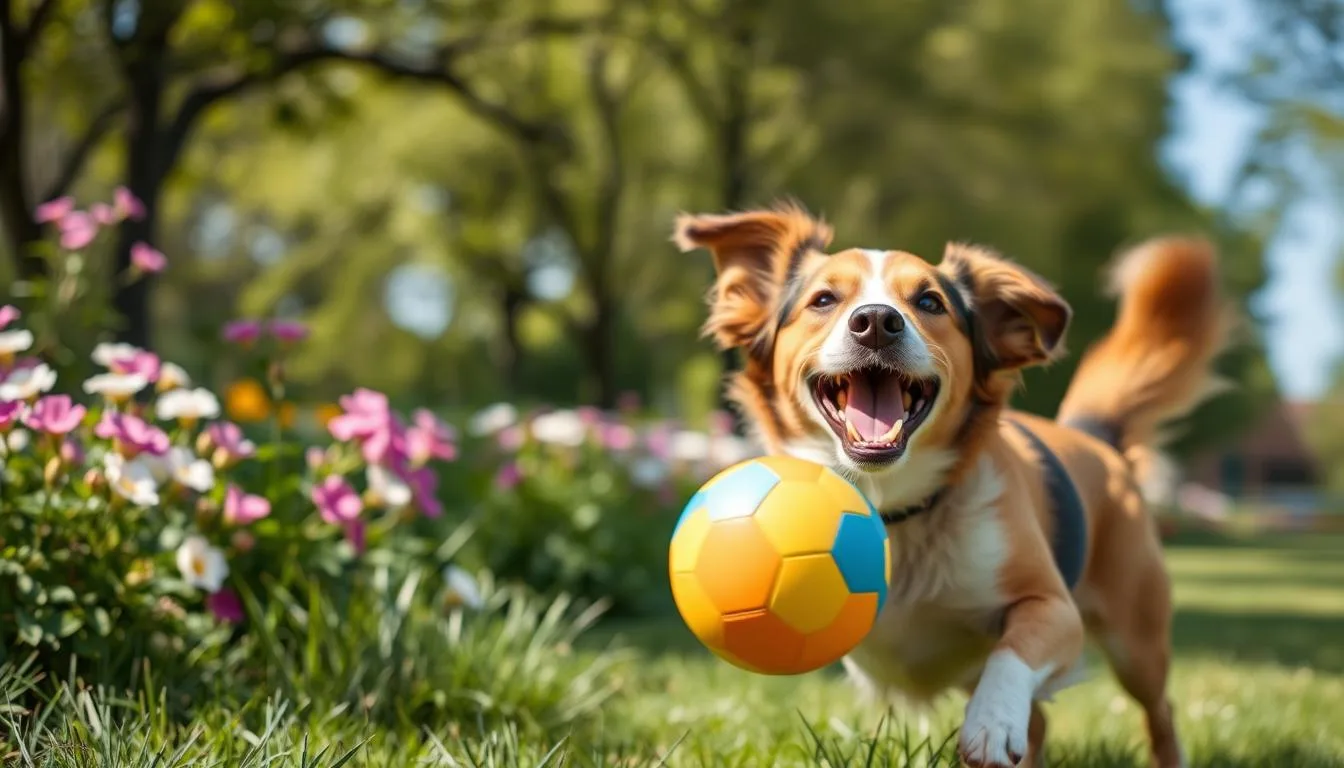
Play is key for a dog’s health and happiness. It gives them exercise, stress relief, and mental challenges. It also strengthens the bond between dogs and their owners.
Studies show that play-based training is the best way to train dogs. It leads to happier dogs and better training results.
Stuart Brown said in his 2009 TED Talk that play is vital for growth. Neurologist Frank Wilson found that early play boosts problem-solving skills. Without play, dogs and humans can become anti-social or even criminal.
Key Takeaways
- Play is essential for a dog’s physical, mental, and emotional well-being.
- Play-based dog training is the most effective form of dog training, leading to happy dog training outcomes.
- Play helps build a strong bond between dogs and their owners, resulting in dog happiness and canine joy.
- Play Deprivation is linked to a major increase in anti-social and even criminal behaviors in both humans and animals.
- Effective play-based dog training reportedly leads to the fastest training results while also enriching the human-animal bond.
- Understanding a dog’s key play aspects can guide owners in playtime activities, boosting training success and dog happiness.
Why Play Matters for Dogs
Play is key for a dog’s happiness and health. It keeps them physically fit, sharpens their minds, and helps them get along with others. For example, playful fights teach puppies to control their bites and understand social rules, which is vital for their pet contentment and puppy fulfillment.
As dogs get older, their play gets more complex. They start solving problems and planning ahead. This kind of play boosts their brain power, gets them ready for surprises, and makes them emotionally stronger. Some of the main benefits of play are:
- Improves physical health and skills
- Enhances mental stimulation and cognitive abilities
- Develops social skills and provides opportunities for socialization
- Contributes to joyful dog behavior and overall well-being
Using interactive toys and setting aside time for play can really boost a dog’s mind and body. Studies show that play can make dogs better equipped to handle tough times and stay healthy. Not giving dogs a chance to play can hurt their happiness and make them harder to adopt.
[fusion_youtube id=”https://www.youtube.com/watch?v=G7GSr36IJo8″ alignment=”” width=”” height=”” start_time=”” end_time=”” autoplay=”false” mute=”false” loop=”false” controls=”true” api_params=”” title_attribute=”” video_facade=”” thumbnail_size=”auto” margin_top=”” margin_bottom=”” hide_on_mobile=”small-visibility,medium-visibility,large-visibility” class=”” css_id=”” structured_data=”off” video_upload_date=”” video_duration=”” video_title=”” video_desc=””][/fusion_youtube]
In short, play is vital for a dog’s growth and happiness. It offers many benefits that lead to pet contentment, puppy fulfillment, and joyful dog behavior.
[fusion_table fusion_table_type=”1″ fusion_table_rows=”” fusion_table_columns=”” awb-switch-editor-focus=”” margin_top=”” margin_right=”” margin_bottom=”” margin_left=”” hide_on_mobile=”small-visibility,medium-visibility,large-visibility” class=”” id=”” animation_type=”” animation_direction=”left” animation_color=”” hue=”” saturation=”” lightness=”” alpha=”” animation_speed=”0.3″ animation_delay=”0″ animation_offset=””]
| Age Group | Play Benefits |
|---|---|
| Puppies | Learn bite inhibition, social boundaries, and develop cognitive abilities |
| Adolescents | Develop problem-solving skills, strategy, and emotional resilience |
| Adults | Improve physical health, enhance mental stimulation, and provide socialization opportunities |
| Seniors | Maintain physical health, provide mental stimulation, and support social bonding |
[/fusion_table]
The Different Types of Play and Their Benefits
Play is key for a dog’s happy pup wellness and canine emotional well-being. There are many types of play, like interactive, social, and solo play. Interactive play, like fetch and agility, strengthens the bond between dogs and their owners. Social play, such as dog daycare, improves social skills and reduces aggression.
Regular play also leads to joyful dog behavior. It reduces stress and anxiety. Dogs that play show a 30% drop in anxiety and stress behaviors. Play also helps dogs stay healthy, reducing obesity risk by 56% in the U.S.
- Interactive play: strengthens bond between dog and owner, improves obedience
- Social play: improves social skills, reduces aggression, enhances canine emotional well-being
- Solo play: reduces boredom, stress, and anxiety, promotes joyful dog behavior
By adding these play types to a dog’s daily routine, owners can boost happy pup wellness. This improves their bond with their dog. Regular play can make the bond 50% stronger, leading to a more loving relationship.[fusion_table fusion_table_type=”1″ fusion_table_rows=”” fusion_table_columns=”” awb-switch-editor-focus=”” margin_top=”” margin_right=”” margin_bottom=”” margin_left=”” hide_on_mobile=”small-visibility,medium-visibility,large-visibility” class=”” id=”” animation_type=”” animation_direction=”left” animation_color=”” hue=”” saturation=”” lightness=”” alpha=”” animation_speed=”0.3″ animation_delay=”0″ animation_offset=””]
| Type of Play | Benefits |
|---|---|
| Interactive Play | Strengthens bond, improves obedience |
| Social Play | Improves social skills, reduces aggression |
| Solo Play | Reduces boredom, stress, and anxiety |
[/fusion_table]
How to Recognize Your Dog’s Play Style
It’s important to know how your dog likes to play. This helps them stay happy and healthy. Every dog is different, and they enjoy activities that match their personality and energy.
Watching how your dog plays can tell you a lot about their style. Some dogs bounce around freely, while others play with more focus. Healthy play is when stronger dogs let weaker ones win, showing it’s safe and fun.
Here are some key factors to consider when recognizing a dog’s play style:
- Energy level: Young dogs tend to enjoy playing with other young dogs due to similar energy levels.
- Size: Dogs of similar size are likely to interact better during play, reducing the risk of injury.
- Play compatibility: Matching dogs by compatible play styles, such as chasing versus physical play, can increase the likelihood of successful dog play.

Understanding these factors helps owners find the right activities for their dogs. This leads to a happier dog and a stronger bond between dog and owner. It’s all about mutual understanding and respect, making training and the relationship more fulfilling.[fusion_table fusion_table_type=”1″ fusion_table_rows=”” fusion_table_columns=”” awb-switch-editor-focus=”” margin_top=”” margin_right=”” margin_bottom=”” margin_left=”” hide_on_mobile=”small-visibility,medium-visibility,large-visibility” class=”” id=”” animation_type=”” animation_direction=”left” animation_color=”” hue=”” saturation=”” lightness=”” alpha=”” animation_speed=”0.3″ animation_delay=”0″ animation_offset=””]
| Play Style | Characteristics | Benefits |
|---|---|---|
| High-energy play | Running, jumping, and playing fetch | Improves cardiovascular health and burns energy |
| Low-energy play | Puzzle toys, scent work, and gentle play | Enhances mental stimulation and relaxation |
[/fusion_table]
Signs Your Dog Needs More Playtime
As a dog owner, it’s key to know when your dog needs more play. Without enough play, dogs can get bored, anxious, or destructive. This can harm their happiness and health. The American Society for the Prevention of Cruelty to Animals says dogs without play can act out, like chewing or digging.
A happy dog shows it through its behavior. Look for a wagging tail, relaxed ears, and a soft mouth. But, if your dog is unhappy or bored, it might chew too much, act out, or not want to play. To keep your dog happy, make sure they get enough play and mental challenges.
- Changes in appetite or sleep patterns
- Excessive chewing or destructive behavior
- Lack of interest in activities or toys
- Increased anxiety or stress
Spotting these signs and giving your dog play and mental challenges is vital. It keeps them happy and healthy. A happy dog is one that gets lots of play and attention, leading to a strong bond with you.
The Role of Play in Strengthening the Dog-Owner Bond
Play is key in making the bond between dogs and their owners stronger. It boosts happy pup wellness and canine emotional well-being. Through play, owners can build trust, communication, and affection with their dogs. This leads to a happier dog.
A study in the Journal of Veterinary Behavior found that play builds trust. It makes a safe environment, which is vital for a strong bond.
Play has many benefits for the dog-owner bond, including:
- Releasing endorphins, which make dogs happy and healthy
- Providing mental stimulation, which reduces stress and anxiety in dogs
- Encouraging physical activity, which burns off energy and promotes fitness
A survey of 2,815 dog owners showed that 99.9% believe play keeps their dogs active and happy. 80% of owners play with their dogs daily to strengthen their bond. Regular play helps owners connect with their dogs, leading to a more loving relationship.
By making play a part of their daily routine, owners can improve happy pup wellness, canine emotional well-being, and joyful dog behavior. This strengthens the bond and creates a lasting, loving relationship.[fusion_table fusion_table_type=”1″ fusion_table_rows=”” fusion_table_columns=”” awb-switch-editor-focus=”” margin_top=”” margin_right=”” margin_bottom=”” margin_left=”” hide_on_mobile=”small-visibility,medium-visibility,large-visibility” class=”” id=”” animation_type=”” animation_direction=”left” animation_color=”” hue=”” saturation=”” lightness=”” alpha=”” animation_speed=”0.3″ animation_delay=”0″ animation_offset=””]
| Benefit | Percentage of Owners |
|---|---|
| Boosts bond | 80% |
| Provides stimulation | 66.67% |
| Improves recall | 50% |
[/fusion_table]
Tips for Incorporating Play Into Your Dog’s Daily Routine
Adding regular play to your dog’s daily routine is key for their health and happiness. Dr. Isabelle Bazin says dogs with too much energy might chew things they shouldn’t or pull on the leash. This shows how important and are through . As dogs get older, they play less, so playtime is vital all their lives.
Setting aside time for play, from a few minutes to 30 minutes, greatly benefits your dog. Puzzle toys, for example, challenge their minds like a long walk. They fit easily into your dog’s routine. It’s also important to mix up activities, as 80% of trainers suggest, to keep your dog interested and happy.
By making play a regular part of your dog’s life, you’ll grow closer and improve their behavior and social skills. You’ll also keep them physically and mentally healthy. With a bit of creativity and dedication, you can make your dog’s life happier and more rewarding.
FAQ
What is the importance of play for dogs?
What are the different types of play for dogs?
How can I recognize my dog’s play style?
What are the signs that my dog needs more playtime?
How does play strengthen the bond between dogs and their owners?
What are some tips for incorporating play into my dog’s daily routine?
Source Links
- The Power of Play: Dogs Just Want to Have Fun – https://www.psychologytoday.com/intl/blog/animal-emotions/201709/the-power-play-dogs-just-want-have-fun
- Play is the Way! – https://happydogtraining.info/advice/play-based-dog-training/
- Playing with dogs may help you relax and focus, study finds | CNN – https://edition.cnn.com/2024/03/13/health/playing-with-dogs-affects-brain-waves-study-wellness/index.html
- The psychology of animal play: Why play matters. – COAPE – https://coape.org/the-psychology-of-animal-play-why-play-matters/
- Puppy play: Why it matters – Crosspaws – https://www.crosspaws.com.au/blog/puppy-socialisation/puppy-play-matters/
- Nutram Pet Products :: article – https://nutram.com/article/playful_pups_understanding_the_play_behavior_of_dogs
- The Importance of Dog Enrichment: Types and Benefits for a Happier Pup – https://barkwells.com/dog-blog/dog-enrichment
- How Understanding Play Styles Can Help You Find Your Dog’s New BFF – https://kuranda.com/blog/play-styles-help-your-dog-find-their-new-bff
- Healthy Dog Play: What It Looks Like | Paws And Reward – https://pawsandreward.com/episode2/
- 10 Signs Your Dog is Happy | Nature’s Recipe – https://www.naturesrecipe.com/blog/10-signs-your-dog-is-happy/
- Is My Dog Happy? – https://www.petmd.com/dog/behavior/is-my-dog-happy
- Why is Play So Important for Your Relationship with Your Dog? – Pet Professional Guild – https://www.petprofessionalguild.com/pet-owners/pets-and-their-people/pets-and-their-people-blog/why-is-play-so-important-for-your-relationship-with-your-dog/
- Study reveals play is essential to dogs’ happiness – https://www.tug-e-nuff.co.uk/pages/study-reveals-play-is-essential-to-dogs-happiness?srsltid=AfmBOoqKkO4EauV4tp6avR95x8FjY4ugZoo87OcczO99_IcD4WTdxvOA
- https://www.akc.org/expert-advice/health/how-much-playtime-do-dogs-need/
- Incorporating Mental Stimulation into Your Dog’s Daily Routine – Positive Pets Dog Training Boise, ID – Puppy Trainers – https://www.positivepetsboise.com/incorporating-mental-stimulation-into-your-dogs-daily-routine/
- Greater Boston Dog Trainers – https://dogtrainersboston.com/incorporating-exercise-a-guide-to-keeping-your-dog-fit-and-happy/