Tips to Manage Separation Anxiety in Dogs
Separation anxiety in dogs is a common issue. It affects about 14-17% of dogs. This problem can cause dogs to be destructive and upset their owners. It’s important to know how to handle it.
Dogs with separation anxiety might bark, howl, or chew things they shouldn’t. They can also urinate or defecate inside. These behaviors often start when there’s a big change, like a new family member.
Spotting these signs is the first step to helping your dog. It’s key to understand that their anxiety comes from missing their owners. In this article, we’ll explore why dogs get separation anxiety, its symptoms, and how to treat it.
Key Takeaways
- Approximately 14-17% of dogs exhibit signs of separation anxiety.
- Dogs with separation anxiety may exhibit symptoms such as barking, howling, urination, defecation, and destructive chewing.
- Separation anxiety in dogs can be triggered by abrupt changes, such as changes in schedule or family membership.
- Recognizing the signs of separation anxiety is the first step towards helping your dog.
- Understanding the causes and symptoms of separation anxiety is key for managing and treating it.
- Positive reinforcement training techniques are recommended for treating separation anxiety in dogs.
Understanding Separation Anxiety in Dogs
Many dogs suffer from separation anxiety. It’s important to know the signs to help them. Dogs with this issue might chew, dig, and bark when left alone. This can upset both the dog and its owner.
What is Separation Anxiety?
Separation anxiety happens when a dog is too attached to its owner. It gets upset when left by itself. This can cause dogs to pee in the house, bark, and howl.
Common Signs to Watch For
Look out for these signs of separation anxiety in dogs:
- Urinating and defecating in the house
- Barking and howling
- Destructive chewing and digging
- Pacing and attempting to escape
To help a dog with separation anxiety, it’s key to understand the cause. Then, you can create a plan to help them.
Why Do Dogs Experience It?
Dogs get separation anxiety for many reasons. It could be due to changes in their environment, past experiences, or attachment issues. Knowing the cause helps owners support their dogs in overcoming this anxiety.
Causes of Separation Anxiety in Dogs
Separation anxiety in dogs can cause a lot of stress for both the dog and the owner. It’s important to know what causes it to help fix the problem. Changes in a dog’s life, like a new work schedule or moving, can lead to separation anxiety. Past experiences, like being abandoned, can also play a role.
Some common reasons for separation anxiety in dogs include:
- Past experiences and trauma
- Changes in routine and environment
- Misunderstanding a dog’s need for independence
Experts say that separation anxiety can be caused by genetics and learned behaviors. Knowing these causes helps owners prevent it in their dogs.
It’s key to tackle separation anxiety to avoid stress and expensive fixes. Understanding the causes and taking action can make dogs feel safer. This reduces the chance of separation anxiety.
The Importance of Routine
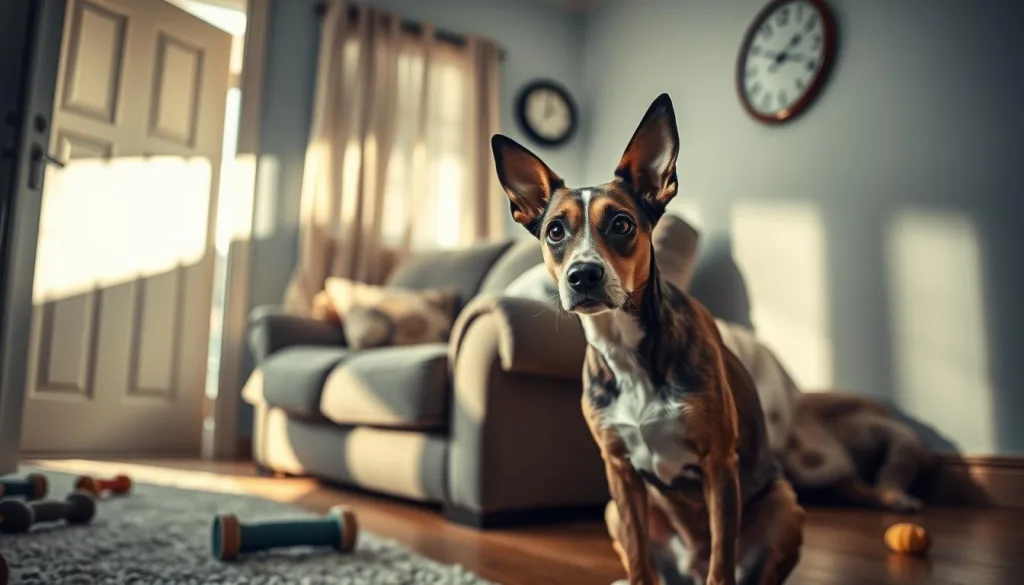
Creating a daily routine is key in managing separation anxiety in dogs. A regular schedule gives them a sense of security and stability. It helps reduce their anxiety when you leave.
Regular times for meals, exercise, and play tell the dog that everything is okay. This helps them understand that your leaving is not a big deal.
Using a routine that includes regular exercise is a common treatment for separation anxiety. It keeps the dog physically and mentally active. Feeding times can also be used to provide a sense of normalcy and stability.
- Reduced anxiety and stress
- Improved behavioral outcomes
- Increased sense of security and stability
Adding a consistent routine to your dog’s life can ease their separation anxiety. It makes your home a more peaceful place for both of you.
Training Techniques to Reduce Anxiety
Training dogs to manage separation anxiety is key. Effective methods can lessen a dog’s anxiety when alone. Positive reinforcement, like rewarding calm behavior, helps.
Gradual desensitization is another method. It involves slowly exposing the dog to what causes anxiety, like the owner leaving. This makes the dog less anxious over time.
Commands to Promote Calmness
Teaching commands like “settle” or “relax” can make dogs calmer. These commands work well with positive reinforcement. They help reduce anxiety and make a peaceful home.
With patience and the right training, owners can help dogs with separation anxiety. Adding training to daily routines can lessen anxiety and strengthen the bond between dog and owner.
Creating a Safe Space for Your Dog
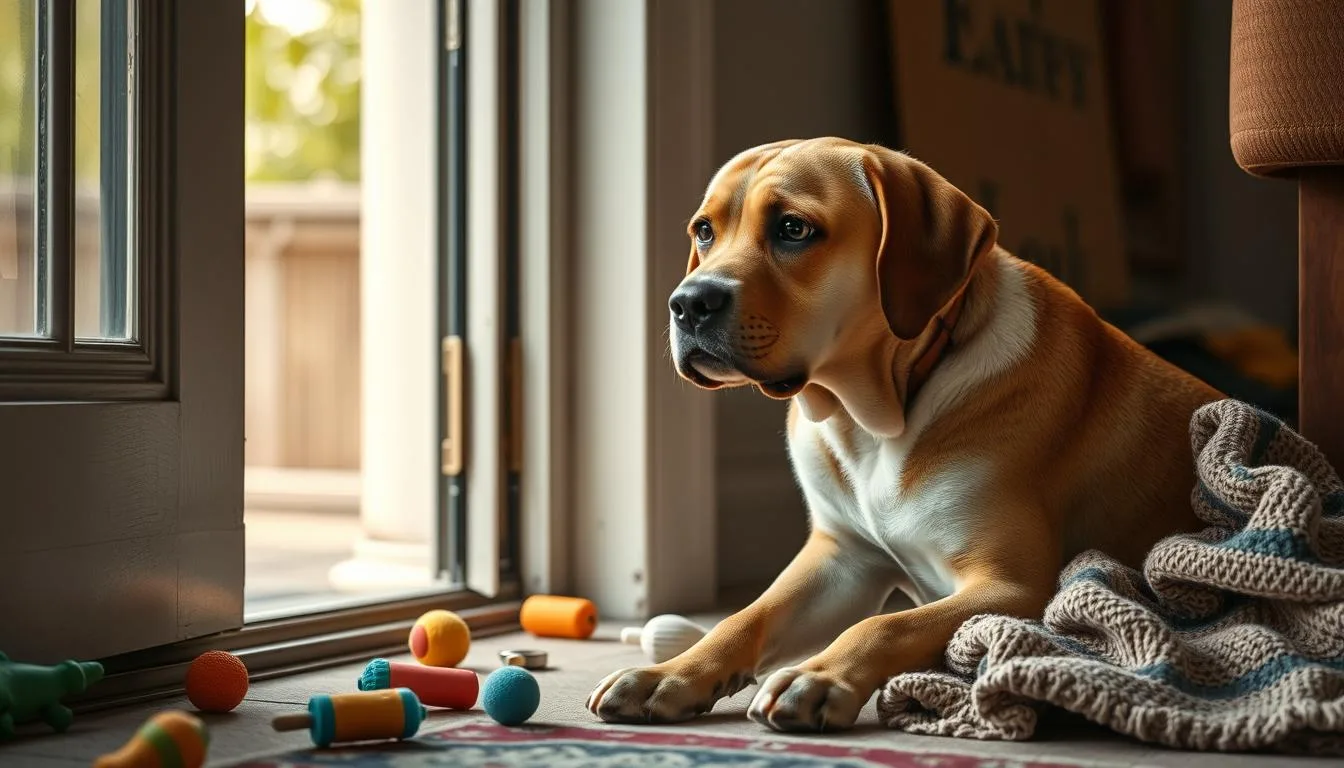
Creating a safe space for your dog is key to reducing separation anxiety. This area should be quiet, comfy, and filled with familiar items. These items help your dog feel secure. About 75% of dogs feel better with a designated safe space.
To make this space, pick a quiet area away from loud noises. Add your dog’s favorite toys or blankets for comfort. Natural remedies like pheromone diffusers or calming music can also help.
Studies show that soft rock and reggae music can calm dogs. A calming environment makes dogs feel more at ease, even in new places.
- Choosing the right area, possibly a quiet room away from external noises
- Including comfort items, such as your dog’s favorite toys or blankets
- Reducing noise and distractions in the area
- Adding natural remedies, such as pheromone diffusers or calming music
By creating a safe space, you can lessen your dog’s separation anxiety. It provides a calm and comfy place for your pet.
Utilizing Professional Help
If your dog has severe separation anxiety, getting professional help is key. Start by talking to a vet to check for any health problems. They might suggest medication to help your dog feel less anxious.
Dog trainers and behaviorists can also be a big help. They create special training plans for your dog. These plans use techniques like desensitization and counterconditioning to help your dog feel better when you leave.
Therapy might also be suggested along with medication. This could include helping your dog get used to you leaving and making leaving a positive experience. Together, these steps can help your dog feel better and happier.
- Consult a veterinarian to rule out underlying medical issues.
- Work with a dog trainer or behaviorist for customized training plans.
- Explore therapeutic options, including desensitization and counterconditioning techniques.
Every dog is unique, so what works for one might not work for another. But with the right help and patience, you can help your dog overcome separation anxiety. This way, your dog can be happy and healthy, even when you’re not there.
Interactive Toys and Strategies
Interactive toys and mental games are key in managing a dog’s separation anxiety. These tools are made to keep a dog’s mind busy. They distract from the anxiety that comes when the owner leaves.
Managing separation anxiety in dogs can be done with various interactive toys. Puzzle toys filled with treats are a great example. They challenge the dog to get the treats out, keeping them busy for a long time.
Engaging Your Dog’s Mind
It’s important to keep a dog’s mind active to reduce anxiety. Interactive toys, like scented dog puzzle toys, are great for this. They hide treats, encouraging mental play.
Recommended Toys for Anxiety Relief
For anxiety relief, treat-dispensing toys are recommended. They can keep a dog busy for up to 30 minutes. This greatly improves their comfort when the owner is away.
Strategies for Keeping Them Occupied
There are many ways to keep dogs occupied. Hiding treats or toys around the house or yard is one. It encourages the dog to search for them. Also, giving them access to windows or outdoor areas lets them watch the world without feeling trapped.
By adding these toys and strategies to your dog’s daily life, you can lessen their separation anxiety. This is vital for their happiness and well-being, making effective separation anxiety management possible.
Natural Remedies for Anxiety Relief
Many dog owners turn to natural remedies to help with separation anxiety. These options can calm dogs, reducing their stress and anxiety. Herbal supplements, aromatherapy, and essential oils are some of the natural remedies available.
About 70% of dogs find relief from natural supplements for anxiety. But, it’s important to talk to a vet before trying any new remedies. This ensures they are safe and right for your dog.
Herbal and Homeopathic Solutions
Herbal and homeopathic solutions, like chamomile and valerian root, are known for their calming effects. You can give these to your dog in treats, capsules, or mix them into their food.
Aromatherapy for Dogs
Aromatherapy uses dog-safe essential oils like lavender to create a calm environment. It’s great for when your dog is feeling anxious or when you’re leaving them alone.
Essential Oils: Dos and Don’ts
Using essential oils for your dog requires knowing the right dosages. Some oils can harm dogs if not used correctly. Always check with a vet first. Use only dog-safe essential oils and follow the dosage instructions carefully.
Managing Your Own Anxiety
Learning how to help a dog with separation anxiety starts with recognizing your role. Dogs pick up on their owners’ emotions, including anxiety. This can make their anxiety worse. By managing your anxiety, you can make a calmer space for your dog, which helps with their separation anxiety.
Using tools like meditation, deep breathing, or exercise can lower your anxiety. Knowing how your calmness affects your dog’s anxiety is key. By managing your anxiety, you positively impact your dog’s well-being and make them feel safer when you’re away.
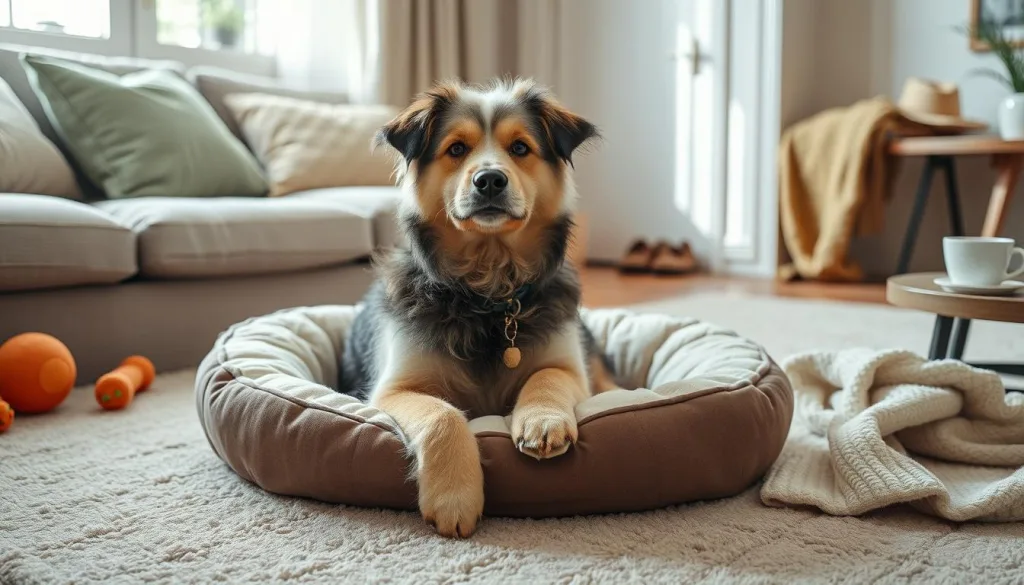
Being a relaxed owner has many benefits. It improves your well-being and creates a calm space for your dog. By focusing on managing your anxiety, you help your dog feel more comfortable and reduce separation anxiety. This strengthens your bond, making your relationship happier and more harmonious.
Long-Term Solutions and Strategies
Addressing separation anxiety in dogs requires long-term solutions. These help build a dog’s confidence and reduce their need for their owner’s presence. Treatment involves strategies like socializing with other dogs and people. This makes the dog more confident in new places and situations.
Positive reinforcement training is key in treating separation anxiety. It encourages good behavior and strengthens the bond between dog and owner. By focusing on these long-term solutions, owners can help their dogs overcome separation anxiety. This leads to a happier life for both the dog and the owner.
Building Confidence
Building a dog’s confidence is vital in treating separation anxiety. This can be done by gradually introducing them to new places and situations. Positive reinforcement training also plays a big role. It gives the dog a sense of security and confidence, reducing their anxiety when left alone.
Socialization and Positive Reinforcements
Socializing with other dogs and people is essential in treating separation anxiety. It helps a dog feel more confident in new environments. Positive reinforcements like treats and praise encourage good behavior. They also strengthen the bond between dog and owner.
Conclusion: A Journey Toward Comfort
Helping dogs with separation anxiety is a journey that needs patience and understanding. Every dog is different, so it’s important to be open-minded. Celebrating small victories helps keep pet owners motivated and sees the progress their dogs make.
This guide offers strategies to ease separation anxiety symptoms. It helps create a more secure and loving bond with your dog. Remember, the journey to manage separation anxiety is not easy. But with the right mindset and flexibility, you can greatly improve your dog’s life.
The success depends on your dedication and trying different techniques. With professional help, customized training, and knowing your pet’s needs, you can help your dog overcome separation anxiety.
FAQ
What is separation anxiety in dogs?
What are the common symptoms of separation anxiety in dogs?
What are the causes of separation anxiety in dogs?
How can a consistent routine help manage separation anxiety?
What training techniques can be used to reduce separation anxiety?
How can creating a safe space help a dog with separation anxiety?
When should I seek professional help for my dog’s separation anxiety?
What are some interactive toys and strategies to help a dog with separation anxiety?
What are some natural remedies that can help with separation anxiety?
How can an owner’s own anxiety affect a dog’s separation anxiety?
Source Links
- Separation Anxiety – https://www.aspca.org/pet-care/dog-care/common-dog-behavior-issues/separation-anxiety
- How To Help a Dog With Separation Anxiety – https://www.petmd.com/dog/training/how-help-dog-separation-anxiety
- Separation anxiety in dogs – https://www.humanesociety.org/resources/separation-anxiety-dogs
- Separation Anxiety in Dogs | VCA Animal Hospitals – https://vcahospitals.com/know-your-pet/separation-anxiety-in-dogs
- Separation anxiety in dogs – https://en.wikipedia.org/wiki/Separation_anxiety_in_dogs
- Separation Anxiety in Dogs – https://www.petmd.com/dog/conditions/behavioral/separation-anxiety-dogs
- Separation Anxiety In Dogs (the symptoms and how to help your dog) – https://animalemergencyservice.com.au/blog/separation-anxiety-in-dogs/
- Managing Your Pet’s Routine and Separation Anxiety | Wellness – https://www.wellnesspetfood.com/blog/back-to-school-tips-managing-your-pets-routine-and-separation-anxiety/
- Separation Anxiety and Your Dog – https://www.mspca.org/pet_resources/separation-anxiety-and-your-dog/
- The Importance of Establishing A Routine – https://wagwellpet.com/blogs/wagwell-blog/the-importance-of-establishing-a-routine?srsltid=AfmBOoqnNeWbYRicvzPYiuOwdyogPeAPdBEINoTRKUvIs6scf0zaDsz2
- How to Ease Your Dog’s Separation Anxiety – https://www.webmd.com/pets/dogs-separation-anxiety
- 5 Techniques To Relieve Separation Anxiety In Dogs – https://autumntrailsvet.com/relieve-separation-anxiety-in-dogs/
- Training Your Dog To Stay Home Alone | RSPCA – RSPCA – rspca.org.uk – https://www.rspca.org.uk/adviceandwelfare/pets/dogs/training/leftalone
- Creating a Zen Space for Your Dog to Alleviate Anxiety – https://be.chewy.com/creating-a-zen-space-for-your-dog-to-alleviate-anxiety/
- Creating a Safe Place for Dogs: 7 Vet-Approved Tips – https://thevets.com/resources/pet-safety/safe-place-for-dogs/
- What to Do for a Dog With Separation Anxiety — Tails of Connection – How to connect with my dog, online dog training, strengthen your bond, dog owners – https://www.tailsofconnection.com/trendingblog/what-to-do-for-a-dog-with-separation-anxiety
- Helping Dogs Overcome Separation Anxiety: Professional Solutions and At-Home Strategies | Manhattan Offleash K9 Dog Training – https://www.dogtrainermanhattan.com/helping-dogs-overcome-separation-anxiety-professional-solutions-and-at-home-strategies/
- How to Help Your Dog Tackle Separation Anxiety Through Enrichment – https://wooof.co.uk/blogs/news/how-to-help-your-dog-tackle-separation-anxiety-through-enrichment?srsltid=AfmBOorgza45IPD5nZDZ1Fu5qGQNqC51WnPglfpMyxZdga-EpshvcD4t
- Best Toys for Separation Anxiety in Dogs: Our Guide – Zach’s Pet Shop – https://zachspetshop.com.au/blogs/guides-advice/toys-for-separation-anxiety-in-dogs?srsltid=AfmBOoo6lxg4itSZYJLhVMAmvXYpW3x2m2YGjxgPe2xyTyST5_-Qt0_V
- Comprehensive Strategies for Mitigating Pet Separation Anxiety through – https://guligulilife.com/blogs/news/comprehensive-strategies-for-mitigating-pet-separation-anxiety-through-interactive-toys-and-cognitive-enrichment?srsltid=AfmBOop4KQGTvXSFrBJxB4saSC-z_oe_iR6nuud5IJD76XFGd_dSTGyp
- 10 Ways to Calm Your Dog Naturally – https://www.petmd.com/dog/general-health/how-to-calm-your-dog-naturally
- Dog Calming Products to Help Ease Dog Anxiety – https://www.petmd.com/dog/behavior/dog-calming-products-help-ease-dog-anxiety
- 24Petwatch Canada: Separation anxiety in dogs – how to help – https://www.24petwatch.com/ca/blog/8-ways-to-help-with-dog-separation-anxiety
- https://www.akc.org/expert-advice/training/soothe-dog-anxiety/
- Separation Anxiety in Dogs | RSPCA – RSPCA – rspca.org.uk – https://www.rspca.org.uk/adviceandwelfare/pets/dogs/behaviour/separationrelatedbehaviour
- 24Petwatch: Separation anxiety in dogs – how to help – https://www.24petwatch.com/blog/8-ways-to-help-with-dog-separation-anxiety
- Separation Anxiety in Dogs: Causes, Signs, and Solutions – https://bestfriends.org/pet-care-resources/separation-anxiety-dogs-causes-signs-and-solutions
- Separation Anxiety in Dogs – https://happybond.com/blogs/healthspan-knowledge/separation-anxiety-in-dogs?srsltid=AfmBOorTlKsRIHtuVrijSBdow4o7q5A1JuQC0Zrpy9mr3agXSirSgPIY
- Separation Anxiety in Dogs | PAWS Chicago – https://www.pawschicago.org/news-resources/all-about-dogs/understanding-dog-behavior/help-with-canine-behavior-challenges/separation-anxiety-in-dogs/showpage
- Understanding and Overcoming Separation Anxiety in Dogs – A District Dogs Guide – https://districtdogs.com/understanding-and-overcoming-separation-anxiety-in-dogs-a-district-dogs-guide/